Nishiazabu Taku
Nishiazabu Taku
Nishiazabu Taku
Minato City, Nishiazabu, 2 Chome−11−5 カパルア西麻布 1階
Saltwater fish / Freshwater fish
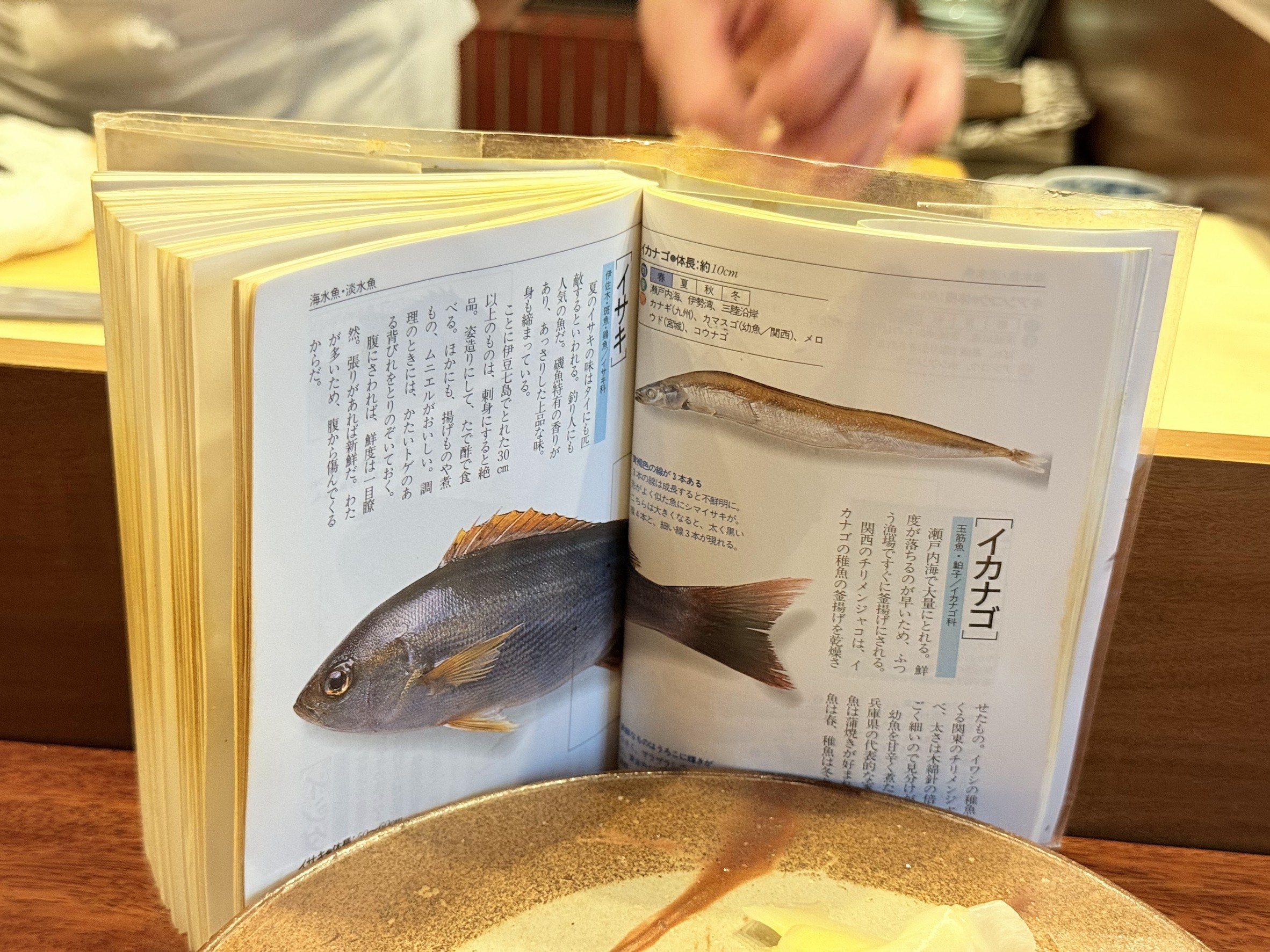
Isaki (Threeline Grunt)
イサキ
Threadfin/Family: Percichthyidae Length: approx. 40cm The taste of summer Isaki is said to rival that of sea bream. It's a popular fish among anglers. It has a unique aroma characteristic of reef fish and a light, refined taste. Especially those over 30cm caught in the Izu Islands are exquisite when made into sashimi. Serve as a whole fish sashimi with tade vinegar. For fried or simmered dishes, remove the sharp dorsal fin spines. Freshness is obvious if you touch the belly. If it's firm, it's fresh. This is because the belly spoils quickly due to the large amount of entrails.
A saltwater fish of the Perciformes order, family Isakidae. Its season is summer, and despite being a white fish, it is fatty and said to have a flavor comparable to sea bream. It is commonly eaten as sashimi or salt-grilled.
Sand Lance
イカナゴ
Sand Lance/Family: Ammodytidae Length: approx. 10cm Caught in large quantities in the Seto Inland Sea. As it spoils quickly, it is usually boiled immediately at the fishing grounds. Chirimenjako from Kansai is dried, boiled young sand lances. Compared to young sardines, they can be distinguished by their thickness, which is about twice that of a cotton needle, making them slender. Kugini, a dish of young fish simmered in sweet soy sauce, is a representative local dish of Hyogo Prefecture. The fish season is spring, and the young fish season is winter.
A small, slender fish. As it spoils easily, it is often processed into boiled or simmered dishes (kugini). Known as a fish that heralds the arrival of spring.
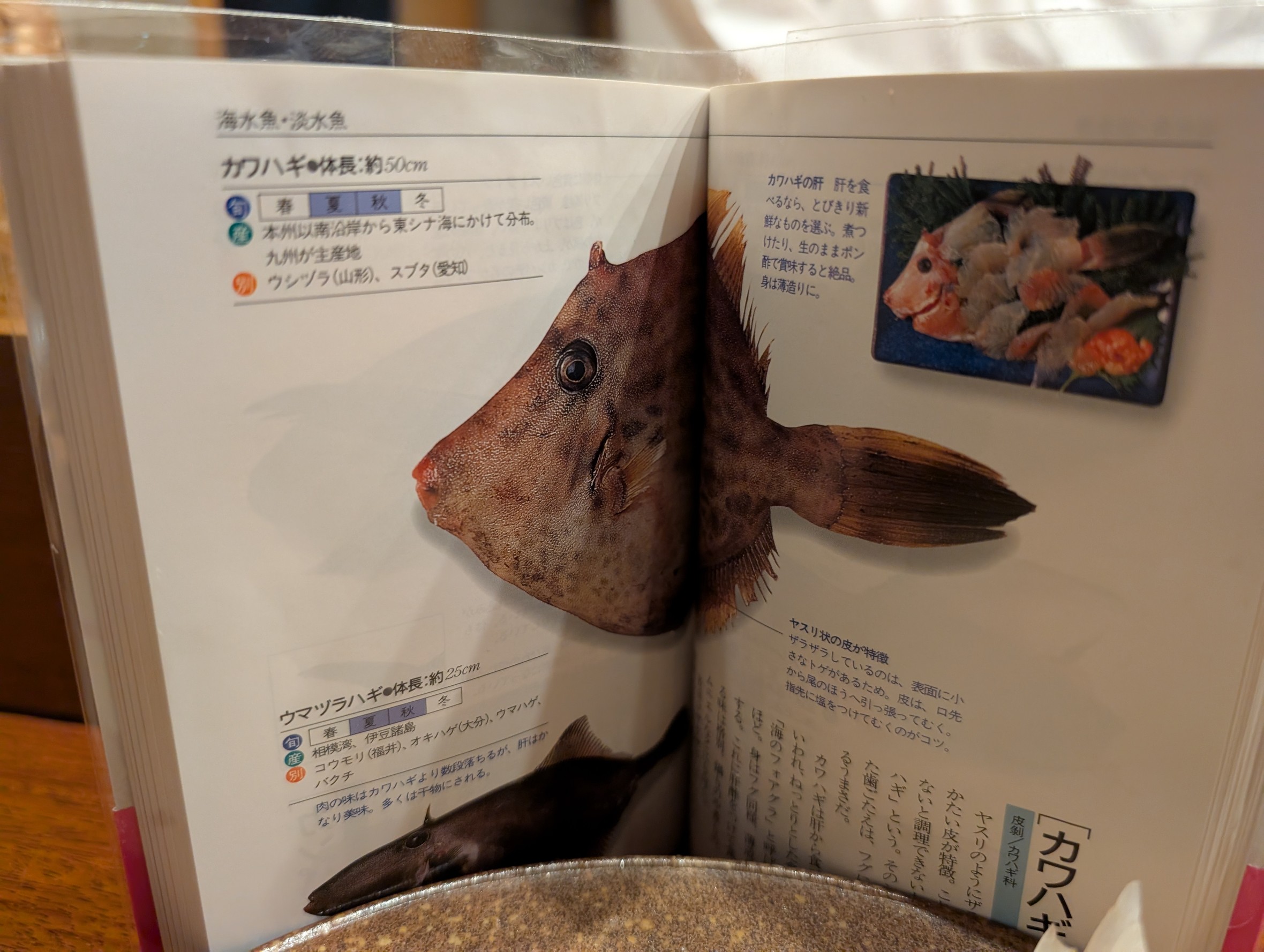
Filefish
カワハギ
Filefish/Family: Balistidae Length: approx. 30cm Distributed along the coast from Honshu southward to the East China Sea. Filefish liver: Choose extremely fresh ones if you want to eat the liver. It's exquisite when simmered or eaten raw with ponzu sauce. The flesh is best thinly sliced.
This name comes from the fact that its tough skin is peeled before cooking. It is a lean white fish, but its rich liver is considered particularly delicious, and sashimi eaten with liver soy sauce is exquisite.
Umazurahagi (Thread-sail Filefish)
ウマヅラハギ
Horse-faced Filefish/Family: Balistidae Length: approx. 25cm Sagami Bay, Izu Islands While the taste of the flesh is several levels below that of filefish, the liver is quite delicious. Most are made into dried fish. Characterized by its rasp-like skin: It's rough due to small spines on the surface. To peel the skin, pull it from the mouth towards the tail. A tip is to use salt on your fingertips when peeling.
Similar to filefish, but with a longer face, resembling a horse's face. Like filefish, its liver is delicious and it is often used in hot pot dishes or dried.
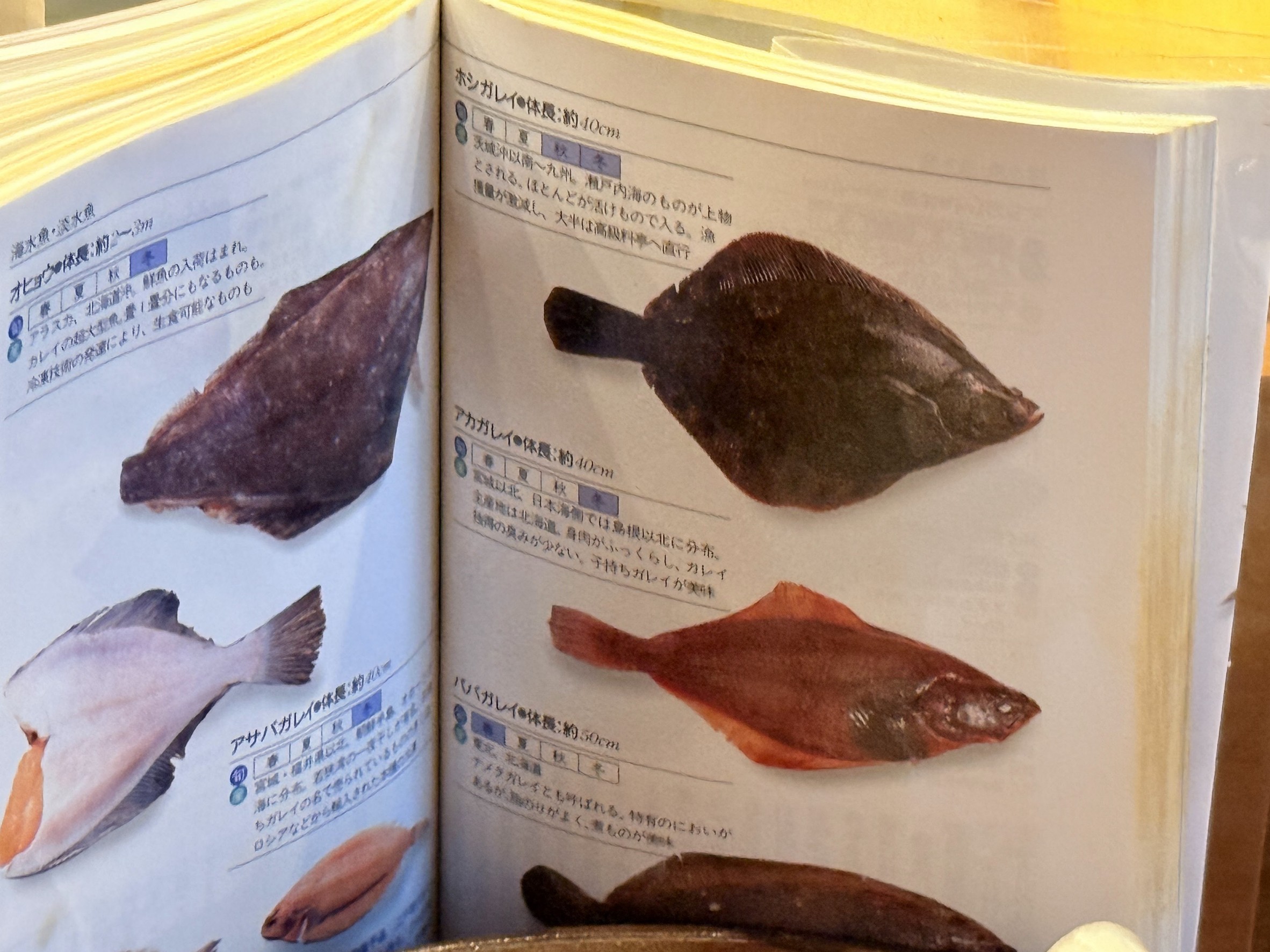
Ohyo (Greenland Halibut)
オヒョウ
Length: approx. 1-3m Rarely available in Alaska or Hokkaido. An extremely large flatfish. Some can be as large as a tatami mat. With the advancement of freezing technology, some are now available for raw consumption.
The largest fish in the flatfish family. It has a strong flavor but is fatty, and is often eaten as sushi toppings, fried, or meunière.
Hoshigarei (Starry Flounder)
ホシガレイ
Length: approx. 40cm Considered top quality from Ibaraki southward to Kyushu and the Seto Inland Sea. Most are delivered live. Catches have drastically decreased, and most go directly to high-end restaurants.
Considered the highest grade among flatfish. Characterized by black spots on its dorsal and anal fins. The flesh is thick and elastic, and is enjoyed as sashimi or simmered dishes.
Akagarei (Red Flatfish)
アカガレイ
Length: approx. 40cm Distributed from Toyama northward, and on the Sea of Japan side from Shimane northward. The main production area is Hokkaido. The flesh is plump and has less of the characteristic flatfish odor. "Konago Garei" (roeless flatfish) is delicious.
A flatfish with a reddish body. It spoils easily, but fresh ones can be eaten as sashimi. Generally, it is prepared as simmered or grilled fish.
Babagarei (Giant Greenling)
ババガレイ
Length: approx. 50cm Distributed from Miyagi and Fukushima northward, and along the Pacific coast of Hokkaido and the Sea of Okhotsk. As the name suggests, its body surface is covered in mucus. Many are sold under the alternative name Nametagarei. A large amount is also imported frozen from Hokkaido, Russia, etc.
Also called Nametagarei, it is considered the king of simmered fish. The flesh is thick and fatty, and simmered fish with roe is especially prized for New Year's dishes.
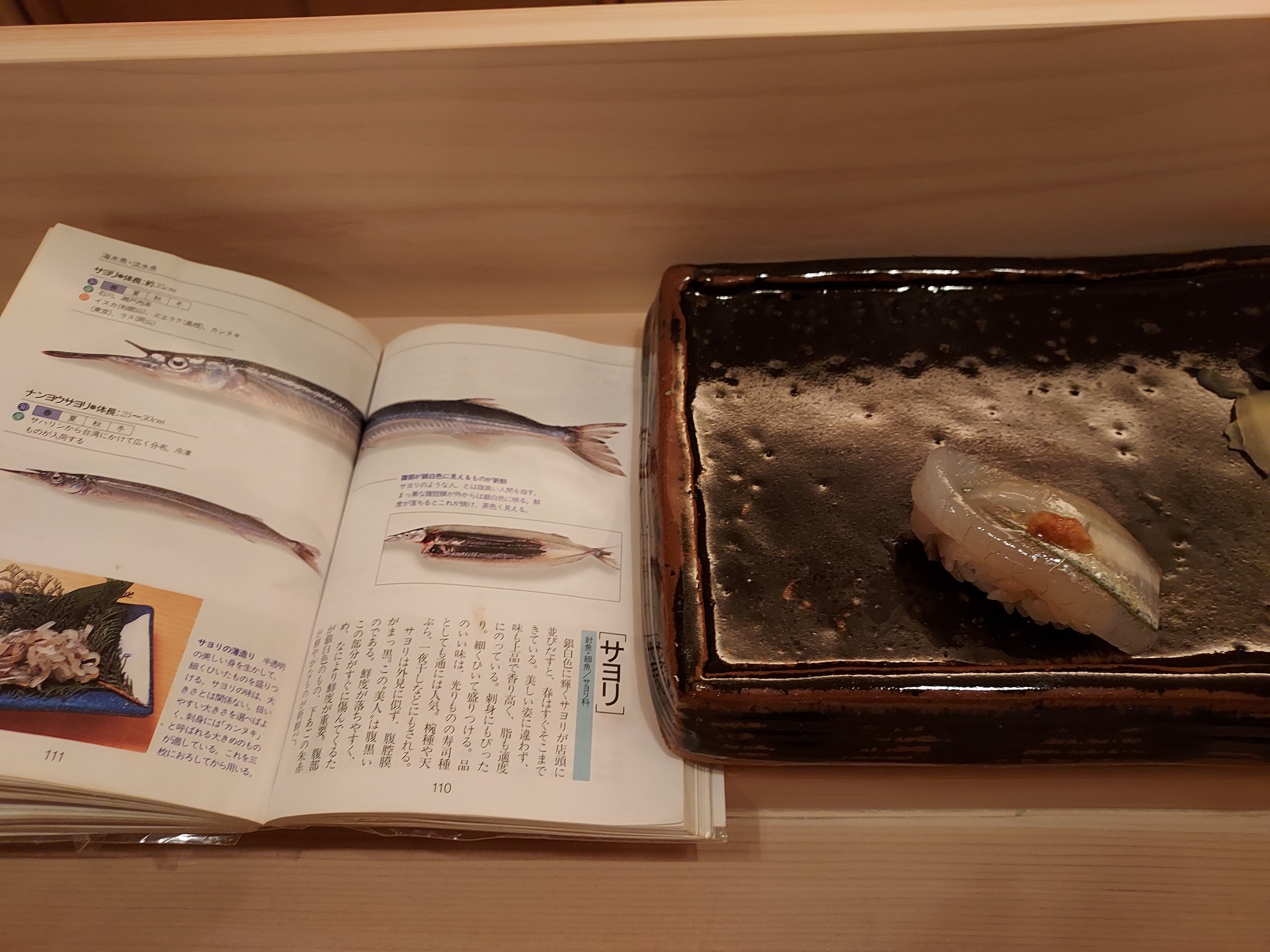
Nanyosayori (Pacific Halfbeak)
ナンヨウサヨリ
Length: approx. 25-30cm Widely distributed from Sakhalin to Taiwan. Imported frozen.
A type of Sayori, widely distributed. It is handled similarly to common Sayori but is often distributed frozen.
Sayori (Halfbeak)
サヨリ
Needlefish/Family: Hemiramphidae Length: approx. 35cm Thinly sliced Sayori: Arrange thinly sliced, beautiful translucent flesh to showcase its appearance. The quality of Sayori is not related to its size. Choose a size that is easy to handle; larger ones called "Kannuki" are suitable for sashimi. Use after filleting into three pieces.
A slender, silvery fish, popular as a harbinger of spring. Its transparent, beautiful white flesh has a light and refined taste. Suitable for sashimi, sushi, tempura, etc.
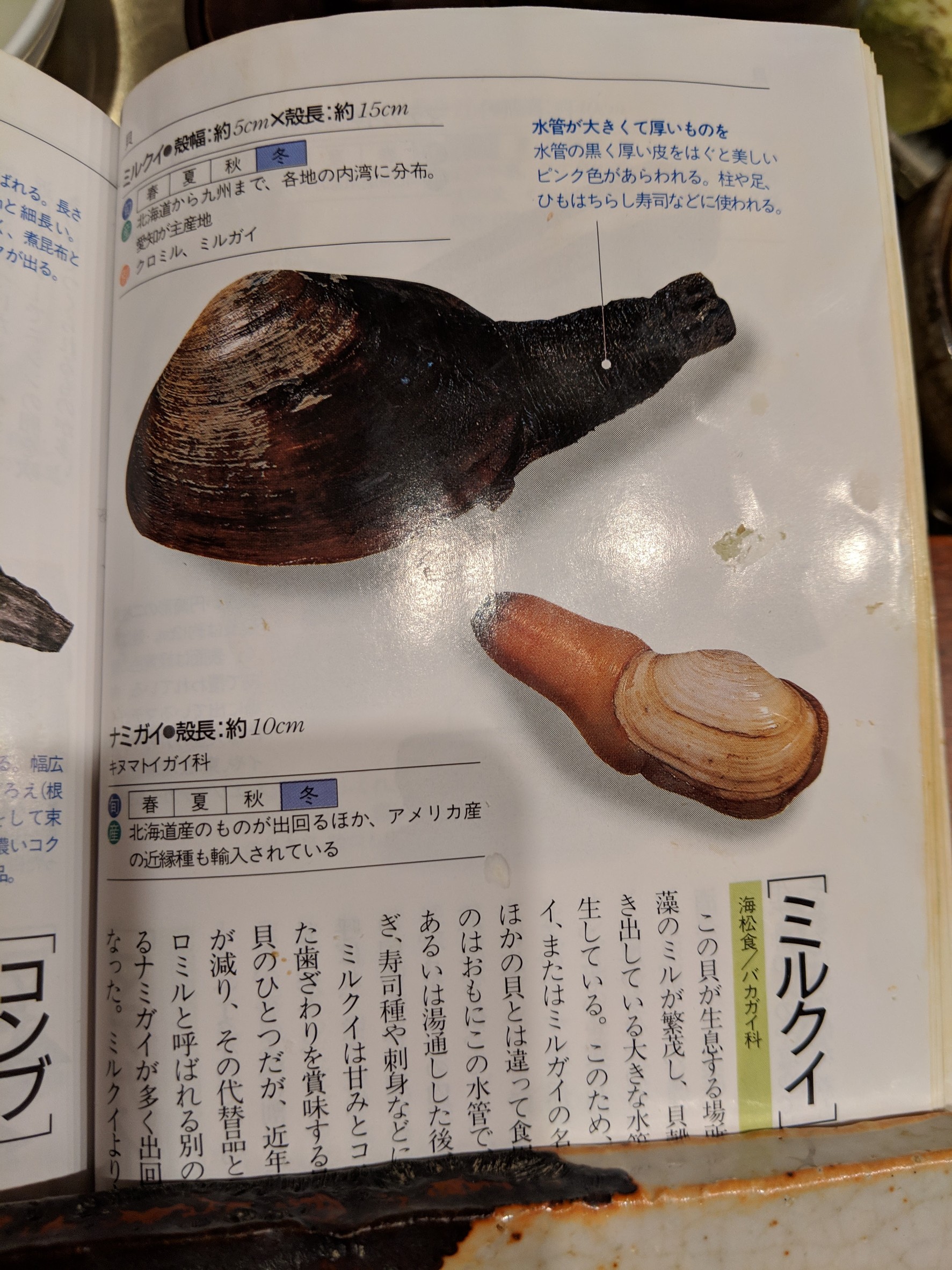
Mirukui (Surf Clam)
ミルクイ
Common Mussel/Family: Mactridae Shell width: approx. 5cm x Shell length: approx. 15cm Those with large, thick siphons: When the black, thick skin of the siphon is peeled, a beautiful pink color appears. The siphon, foot, and byssus are used in chirashizushi, etc. Those with large, thick siphons.
Commonly known as Mirugai. The large siphon protruding from the shell is eaten. It has a unique sweetness and chewy texture, and is popular as a high-end sushi topping.
Namigai (Giant Surf Clam)
ナミガイ
Family: Pharidae Shell length: approx. 10cm Available from Hokkaido, and related species from the US (Shiromiru) are also imported. Generally distributed as "Shiromiru". Shell length: approx. 10cm Shiromiru
Commonly known as Shiromiru. Often distributed as a substitute for Honmiru (Mirukui), but it is sufficiently delicious with its strong sweetness and crunchy texture.
Place Information
Contains Dairy
Peanut Allergy
Contains Fish
Contains Shellfish
Gluten Free
Vegan Options
Need dietary or allergy information?
4.7
277 customers praised this place. (Google)
$
$$$$
Expensive
Minato City, Nishiazabu, 2 Chome−11−5 カパルア西麻布 1階
Are you the owner? Please let us know if there's any incorrect information.
Report Incorrect InfoLoading map...